
Projects

SNADE – The SNADE project addresses the vulnerabilities of autonomous drones operating in extreme environments, where GNSS signals are absent or compromised. It aims to develop intelligent navigation systems with low impact in terms of size, weight, power consumption, and cost (SWaP-C), suitable for deployment also in swarm configurations. The approach is based on the integration of heterogeneous sensors (optical, inertial, radar, LiDAR, etc.) and advanced data fusion techniques, in order to provide quantifiable performance in hostile environments.
Particular attention is also devoted to the design of resilient mesh networks, integrated with advanced security mechanisms, and to the development of tailored algorithms for secure communications.
Improve (PNMR – National Plan for Military Research) – The project, funded by the Italian Ministry of Defense and in collaboration with IPS, aims to create a maritime surveillance system. This system will provide support for the identification of dangerous situations such as anomalies in ship trajectories.
The system will exploit estimation mechanisms based on both dynamic and data-driven models, powered by the fusion of multiple sources of information (e.g., satellite communications, open sources, cartography, avionics and satellite data/images as well as data acquired from the coastal radar supported by VHF/AIS communications).


SAF€RA HUMAN4DIG5.0 – Designing safety and health compliant Cyber Physical systems for digitalized surveillance and assistance processes in hazardous workplaces (2024 – 2026, Starting date April 2025): The project assesses and systematizes the actual experience of workers about automatic surveillance and assistance applications. The final aim is to propose guidelines and a practical reference framework for developing automatic surveillance and assistance tools for supporting OSH practitioners to plan worker new digitalized safe processes and healthy workplaces.
The project is co-funded by INAIL and involves also UniSalento (coordinator), University of Belgrade, Ipartic Consulting and Pesi (Spain).
PACY – ProActive CYbersecurity.
The project, funded by Google.org, aims to develop a platform that supports small and microenterprises in managing all elements related to the cyber world. While the Milan Polytechnic focuses on prevention aspects, the Bio-Medical Campus deals with incident management. Specifically, the platform will be responsible for identifying possible solutions to be implemented in the prevention phase. During the incident phase, it will identify the nature of the incident and provide indications on the actions needed to mitigate the damage and restore services, covering all aspects: technical, legal, and communication.

SynCrea – The project aims to develop the software suite, SynCrea, which will enable the implementation of an ergonomic security model. On one hand, it ensures the possibility of maintaining smooth post-production dynamics, while on the other hand, it increases the level of traceability and protection of the content. Therefore, the project aims to offer an integrated solution for secure management of audiovisual content from the early stages of the production process to the creation of the final master. By ensuring traceability of all process stages and all sub-products originating during the different stages of post-production, SynCrea also aims to ensure, consistently with the increasingly prevalent logic of smart production, maximum process flexibility by allowing the possibility of extending the safe zone beyond the physical boundaries of post-production laboratories.


DRIVERS – A Combined Data-Driven and Experience-Driven Approach to Systemic Risk Analysis (2022-2024): The project aims at developing a risk assessment methodology that combines machine learning techniques with the experience of human experts. In particular, machine learning techniques are quite effective when sufficient training data is available, but are not flexible and do not provide information about the reason why inputs are mapped into outputs. Conversely, decision support systems based on knowledge elicited by human experts are able to account for intangible factors and for the intuition of decision makers, but typically involve ambiguous, linguistic or contradictory information. The project aims to combine such two domains in order to obtain a faceted and expressive risk analysis framework, which will be applied to scenarios such as biofuel production and Seveso plants in general.
RESIM – Platform for the experimental assessment of resilience in critical infrastructures (2021 – 2023). This project aims to improve the cyber resilience of critical infrastructures by developing a specific human-cyber-physical environment. The project builds on the work carried out in the framework of the European projects “Facies and Resisto” and is part of the training activities (master) carried out by the two universities (UCBM & RM3), in the field of critical infrastructures.


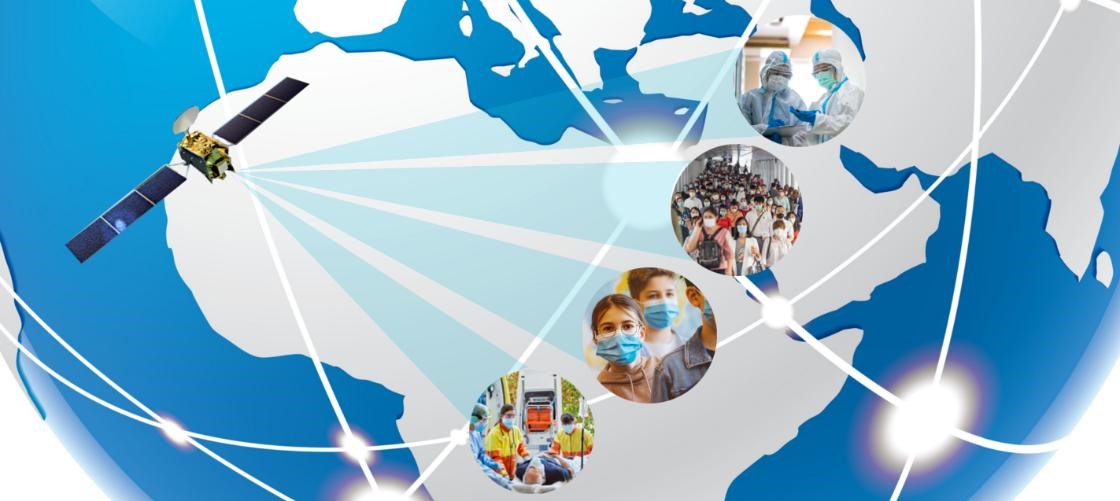
HERMES – Healthcare Emergency support system for the distributed Response and Monitoring of Epidemics in the Society (2020 – 2022): HERMES is an ecosystem of services able to support screening, prevention, monitoring and healthcare logistics in response to major emergencies such as COVID 19. Specifically, the application created by the University Campus Bio-Medico of Rome analyses the CT and X-rays of the lungs carried out in telemedicine to identify possible positive cases supported by Artificial Intelligence techniques.
RAFAEL – System for Risk Analysis and Forecast for Critical Infrastructure in the ApenninEs dorsaL Regions (2019 – 2021): The RAFAEL project is a part of technological developments of the last few years and aims to integrate them together with technologies that will be purposely developed in the project within a platform. Progetto co-finanziato dal Ministero Università e Ricerca a valere sui fondi PON “Ricerca e Innovazione” 2014-2020 e FSC di cui all’avviso D.D. del 13 luglio 2017 n. 1735 – Domanda ARS01_00305 area di specializzazione “Smart Secure & Inclusive Communities”.
SAF€RA 4STER – Integrated Management of Safety and Security Synergies in Seveso Plants (2019 – 2021): The project aims to provide insights and best practices to raise awareness and effectiveness of European process industries – and specifically Seveso plants – with respect to cyber-physical security threats and the work-related safety of employees. The project is co-funded by INAIL and involves also VTT (Finland), TNO (The Netherlands) and the University of Bologna.









DYCOH (2010-2012): National project on innovative biomedical image manipulation for diagnosis.